

All games at Sportuna Casino, from the spinning roulette wheel to the shuffling deck of blackjack, works on a basic mathematical concept called the house edge https://sportunascasino.com/. This notion is not a secret or a mark of unfairness; it is the embedded statistical advantage that guarantees the casino can keep its doors open, cover wages, and continue offering the amusement that players across the UK seek. Comprehending the house edge transforms a player from someone who simply hopes for luck into an knowledgeable bettor who understands precisely what they are facing. At Sportuna Casino, openness around game mechanics is a foundation of the platform, and the house edge is the most crucial number to comprehend before making any bet. This article will analyze what the house edge signifies, how it changes across the extensive game collection, and how it interacts with offers, banking options, and the overall platform experience, delivering a thorough explanation to making smarter decisions.
Payment Methods, Processing Times, and the Cost of Entry
The financial infrastructure of Sportuna Casino is designed to accommodate UK players with a selection of standard and reliable payment methods, and the performance of these systems shapes the practical experience of the house edge. While the house edge works on the game screen, the speed and cost of moving money on and off the platform govern how quickly a player can retrieve their winnings or top up their next session. Typical deposit methods feature Visa and Mastercard debit cards, which are handled instantly and free of charge from the casino side. E-wallet services such as PayPal, Skrill, and Neteller are also widely available, giving an further layer of separation between the casino and the player’s bank account, with deposits showing immediately. Prepaid vouchers and bank transfers may also be offered, though bank transfers generally require a more gradual processing time, potentially needing one to three business days to clear.
A rapid reference for typical payment methods and their usual processing features is as follows:
- Visa debit and Mastercard debit cards: Instant deposits, without charges; withdrawals need 3–5 business days.
- PayPal, Skrill, Neteller: Instant deposits; withdrawals commonly processed within hours or the same day after approval.
- Bank transfers: Deposits can take 1–3 business days; withdrawals could take 3–7 business days.
- Prepaid vouchers (e.g., Paysafecard): Fast deposits, but not available for withdrawals; an different method is required for cashouts.
Payout processing durations are a critical factor that a lot of users overlook when weighing the full price of playing. A waiting period, typically spanning up to 24 or 48 hours, is standard practice and permits the casino to carry out required verification checks. Once approved, e-wallet withdrawals are typically the swiftest, frequently landing within hours or the same day. Debit card withdrawals can require three to five business days to appear in a bank account. These waiting times are not a concealed casino advantage, but they pose a friction fee. A player who scoops a win and submits a withdrawal on a Friday might not see the funds until the next Wednesday, a period during which the money is locked away. Sportuna Casino works under a strict licensing framework that mandates identity verification, or KYC, procedures. Finishing this verification early, by sending proof of identity and address, can substantially expedite the first withdrawal. The lack of transaction fees is a common expectation for UK players, and any deviation from this should be verified in the cashier section’s terms before making a deposit.
Reading the RTP and Why It Is Far From the Whole Story
RTP, or RTP, is the opposite of the house edge and is the figure most commonly displayed in the information sections of online slots. A game with a 96 percent RTP has a 4 percent house edge. While RTP is a useful starting point, it is a profoundly misunderstood statistic that can lead players astray if taken in isolation. The RTP figure is a calculated calculation based on millions of simulated spins, and it assumes optimal play and a complete cycle of the game’s random number generator. A single player’s session is a tiny, statistically insignificant blip within that cycle. A slot with a 97 percent RTP can quickly consume a deposit of £100 in a few minutes, while a slot with a 94 percent RTP might pay out a massive win. The RTP does not guarantee a return of 97 pence for every pound wagered in a session; it is a long-term average that only the casino, with its aggregated data across all players, ever truly encounters.
Furthermore, the way RTP is achieved varies greatly between game types. In a high-volatility slot, the RTP might be largely weighted towards a rare, massive jackpot. The bulk of the game’s returns are concentrated in a small fraction of spins, meaning the base game can feel very tight. A low-volatility game distributes the RTP more consistently through frequent, smaller wins, creating a smoother experience. At Sportuna Casino, players can find both types, and neither is inherently better; the choice depends on personal risk tolerance and session goals. A player aiming to extend playtime with a modest bankroll should look for low-volatility games with a high RTP, while a player chasing a life-changing win might accept a lower RTP and higher volatility. The critical takeaway is that RTP is a descriptor of the game’s mathematical engine, not a promise of individual results, and it should always be considered alongside the volatility profile of the specific title.
How the House Edge Shapes the Sportuna Casino Game Library
Sportuna Casino hosts a large array of games, and the house edge is the silent architect shaping the experience of each category. Slot games, which form the bulk of the library, typically carry a house edge spanning from 2 percent to 8 percent, though the precise number for each title is determined by its particular programming and paytable structure. High-volatility slots might have a similar theoretical RTP to low-volatility ones, but the distribution of wins is entirely different, producing the illusion of a more or less generous machine in the short term. Table games, by contrast, provide some of the most favourable odds in the entire casino. A regular game of blackjack, when played with perfect basic strategy, can lower the house edge to below 1 percent, sometimes as low as 0.5 percent depending on the specific rule set applied to the table. This makes blackjack a draw for players who prefer to lessen the statistical drain on their funds while enjoying a skill-based challenge.
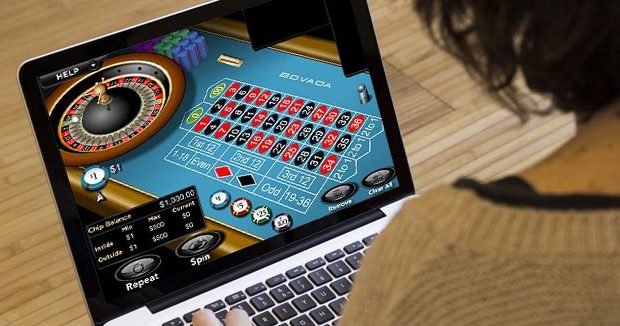
Roulette provides a vivid lesson in how small rule changes greatly affect the house edge. The European roulette variant, with its single zero, runs at a 2.70 percent house edge, as mentioned earlier. However, if a player opts for an American roulette table, which includes both a single zero and a double zero, the house edge nearly doubles to 5.26 percent. The payouts stay identical, but the extra pocket greatly worsens the player’s odds. Sportuna Casino provides clear access to both variants, and the savvy UK player will always gravitate towards the European version. Live casino games, streamed in high definition from professional studios, obey the same mathematical principles. The social interaction and immersive presentation do not change the underlying numbers, but they do add a layer of entertainment value that many players believe justifies the statistical cost. The key is to approach each game understanding the estimated cost of the entertainment, gauged by the house edge.
The Mathematical Foundation of the House Edge
The house edge is expressed as a percentage that indicates the average gross profit the casino plans to hold from each game over a long term. It is essential to understand that this percentage does not hold to a single visit or a individual spin; it is a long-term average calculated over thousands, or even millions, of rounds. For instance, if a game has a house edge of 2 percent, the expected return to player, or RTP, is 98 percent. This indicates that for every £100 wagered in total by all players on that game, the casino plans to hold £2 over the long term. In the short term, variance, which is the mathematical term for luck, governs the experience. A player can win a jackpot on a slot with a 4 percent house edge or lose their entire bankroll on a blackjack table with a 0.5 percent edge in a one evening. The mathematics only becomes reliably predictive over a massive sample size, which is why the casino business model is one of quantity and patience.
The calculation of the house edge is grounded in the difference between the true odds of an event occurring and the payout odds the casino offers. A simple example is the single zero European roulette wheel found at Sportuna Casino. There are 37 pockets, but a winning straight-up bet pays 35 to 1. The true odds of hitting a single number are 36 to 1, creating a gap that generates the house edge of 2.70 percent. This gap is not a design error; it is the cost of playing. Every game in the Sportuna Casino lobby has this gap built into its rules, though the size of the gap varies dramatically. Understanding this permits a player to distinguish between a game that is merely a bit of fun with a high entry cost and a game where strategic decisions can narrow the casino’s advantage to a very thin margin, making the bankroll endure much longer.
Rewards, Wagering Requirements, and the Real Edge
The main welcome bonus and current promotions at Sportuna Casino add a layer of complexity to the house edge calculation that many players miss. A bonus is not no-cost money; it is a restricted loan from the casino that includes wagering requirements. These requirements dictate how multiple times the bonus amount, and occasionally the deposit amount, must be wagered before all winnings can be withdrawn. For example, a 100 percent match bonus up to £100 with a 35x wagering requirement on the bonus signifies a player who deposits £100 and receives a £100 bonus must wager £3,500 before cashing out. During this wagering process, the house edge is persistently grinding against the player’s balance. The effective cost of the bonus is the expected loss from applying the house edge to the overall wagering requirement.
If a player uses the bonus on slots with an mean house edge of 4 percent, the expected loss on £3,500 of wagering is £140. This exceeds the £100 bonus value, implying the player is statistically destined to lose the whole bonus and some of the deposit before meeting the requirement. This does not suggest a bonus is a bad deal; it signifies it is a tool that must be used strategically. The smartest method is to use bonus funds on games with the smallest possible house edge that still count fully to the wagering requirement. Many casinos, including Sportuna, often limit table games like blackjack from contributing 100 percent to wagering, precisely because the low house edge makes it more straightforward to retain the bonus value. Players must review the specific terms and conditions for each promotion to grasp which games are eligible and at what contribution rate. The bonus transforms the house edge from a basic cost of entertainment into a mathematical hurdle that must be surpassed to unlock value.
Licensing and Protection, and the Integrity of the Random Number Generator
The house edge is only a just proposition if the games are verifiably fair, and this is where the regulatory framework governing Sportuna Casino becomes paramount. The platform operates under a license issued by a respected gaming authority, which for UK-facing casinos is commonly the UK Gambling Commission or a well-regarded offshore body like the Malta Gaming Authority. This licence is not a mere formality; it imposes rigorous technical standards on the running of the casino. The core of game fairness is the Random Number Generator, or RNG. This is a software program that produces a sequence of numbers with no detectable pattern, ensuring that every card dealt, every spin of the reel, and every roll of the dice is entirely independent of previous results. The RNG is what assures that the house edge is applied consistently over time, rather than being manipulated to target individual players or sessions.
Independent testing laboratories, such as eCOGRA, iTech Labs, or GLI, are contracted to audit these RNG systems periodically. These auditors take millions of game rounds and analyse them to confirm that the actual results fall within the anticipated statistical variance of the theoretical RTP. A certificate from such a body, often displayed in the footer of the Sportuna Casino website, is a player’s assurance that the 2.70 percent house edge on roulette is exactly that, and not a higher figure disguised by tampered software. In addition to RNG fairness, the licence mandates the segregation of player funds from operational company funds, ensuring that player balances are safeguarded in the event of insolvency. Data security is handled through SSL encryption, which protects financial transactions and personal details from interception. This entire system of regulation and testing means that when a UK player logs into Sportuna Casino, they are engaging with a system where the house edge is a clear, audited mathematical certainty, not a concealed variable.
Mobile Gaming, UX, and Optimizing the House Edge
The Sportuna Casino platform is fully optimized for mobile phones, letting UK players to access the complete collection from a smartphone or tablet without downloading a dedicated application, although an app may be offered according to the platform’s present lineup. The mobile design is built to mirror the desktop experience with intuitive touch controls and a layout that adjusts to smaller screens. From the standpoint of the house edge, the playing device makes no difference at all. The RNG on a mobile slot is the same to the RNG on the desktop edition of the very game. A blackjack hand drawn on a mobile phone has the same 0.5 percent house edge as one dealt on a computer. The underlying math is independent of the platform. That said, the user experience can indirectly influence a player’s relationship with the house edge. A seamless, fast-loading mobile site cuts down on frustration and enables more careful, concentrated play, which is crucial for games of strategy like blackjack or video poker.
The comfort of mobile play, even though a tremendous advantage, likewise requires a systematic approach. The capacity to wager from anywhere at any time can blur the limits of a scheduled session. A player who aims to play for an hour on a desktop might find themselves making hasty deposits and spins during a commute or a lunch break. This boosts the total volume of wagering, which, given the house edge, raises the anticipated loss over time. The house edge is a function of total wagered amount, not time spent. A player who multiplies their total wagering by playing on mobile increases twofold their anticipated statistical loss. The controlled gambling tools incorporated into the Sportuna Casino platform, such as deposit limits, reality checks, and session timers, are consequently vital companions to mobile play. They enable a player to harness the convenience of the platform while keeping a firm budget that matches with the mathematical realities of the games. The goal is not to avoid the house edge, which is unattainable, but to ensure that the cost of the entertainment remains within a pre-planned, affordable boundary.
The house edge is the constant cost of the thrill that Sportuna Casino delivers. It is not a secret to be worried about but a transparent business model to be comprehended. By grasping how it changes from the spinning reels of a high-volatility slot to the strategic decisions of a blackjack table, a player moves from blind chance to informed choice. The platform’s game library, payment infrastructure, and mobile accessibility all revolve around this central mathematical truth. The most successful players are not those who chase losses or have faith in lucky streaks, but those who approach the experience with a clear budget, a game plan based on the lowest achievable house edge for their preferred style, and a firm knowledge that the true value lies in the enjoyment, not the expectation of profit. Before placing the next bet, a player should review the RTP, confirm the rules, and assess whether the price of the spin, measured by the house edge, is worth the ride.
Leave A Comment